
Every October, the same thing happens in my treatment room. The heat finally breaks, everyone celebrates, and two weeks later my clients start telling me their skin feels tight, flaky, dull, or suddenly sensitive to products they've used for years.
Nothing is wrong with your skin. The season changed, and your routine didn't.
The good news: a fall reset rarely means starting over. Most of the time it's two or three smart swaps, in the right order. The bad news: this is also the time of year people spend the most money on the wrong products, because a dry, irritated face makes you want to buy everything.
So let's do this the smart way.
What Actually Changes in Your Skin in Fall
Your skin's outer layer works like a brick wall. Skin cells are the bricks, and a mix of lipids (ceramides, cholesterol and fatty acids) is the mortar. That wall keeps water in and irritants out.
Fall in Arizona hits that wall from three directions:
Drier air. The less moisture in the air, the faster water evaporates out through your skin. Desert air is dry year-round, but once monsoon season ends and the heater comes on, it gets drier still.
Summer's leftovers. Months of sun leave behind pigment, rough texture and a thicker, duller outer layer, since your skin builds up that layer to protect itself from UV.
Hotter showers. The first cold morning, everyone cranks the water up. Hot water dissolves the lipids holding your barrier together.
Add the fact that your skin renews itself more slowly every year, by roughly half between your 20s and your 70s (Grove and Kligman, 1983), and you've got a recipe for dull, dehydrated, irritated skin by Thanksgiving.
Step 1: Audit What You Already Own
Before you buy a single thing, pull everything out of your cabinet and sort it into three piles:
Keep: your SPF, a gentle cleanser, and anything that's working.
Pause: strong exfoliants, foaming or gel cleansers if your skin feels tight, and any acne-drying products you leaned on in summer.
Toss: anything expired, anything that's changed color or smell, and anything you bought because of a trend and never finished.
I see a lot of shelves with five serums doing the same job and nothing doing the job the skin actually needs. A routine with fewer, better products almost always beats a crowded one, and it usually costs less.
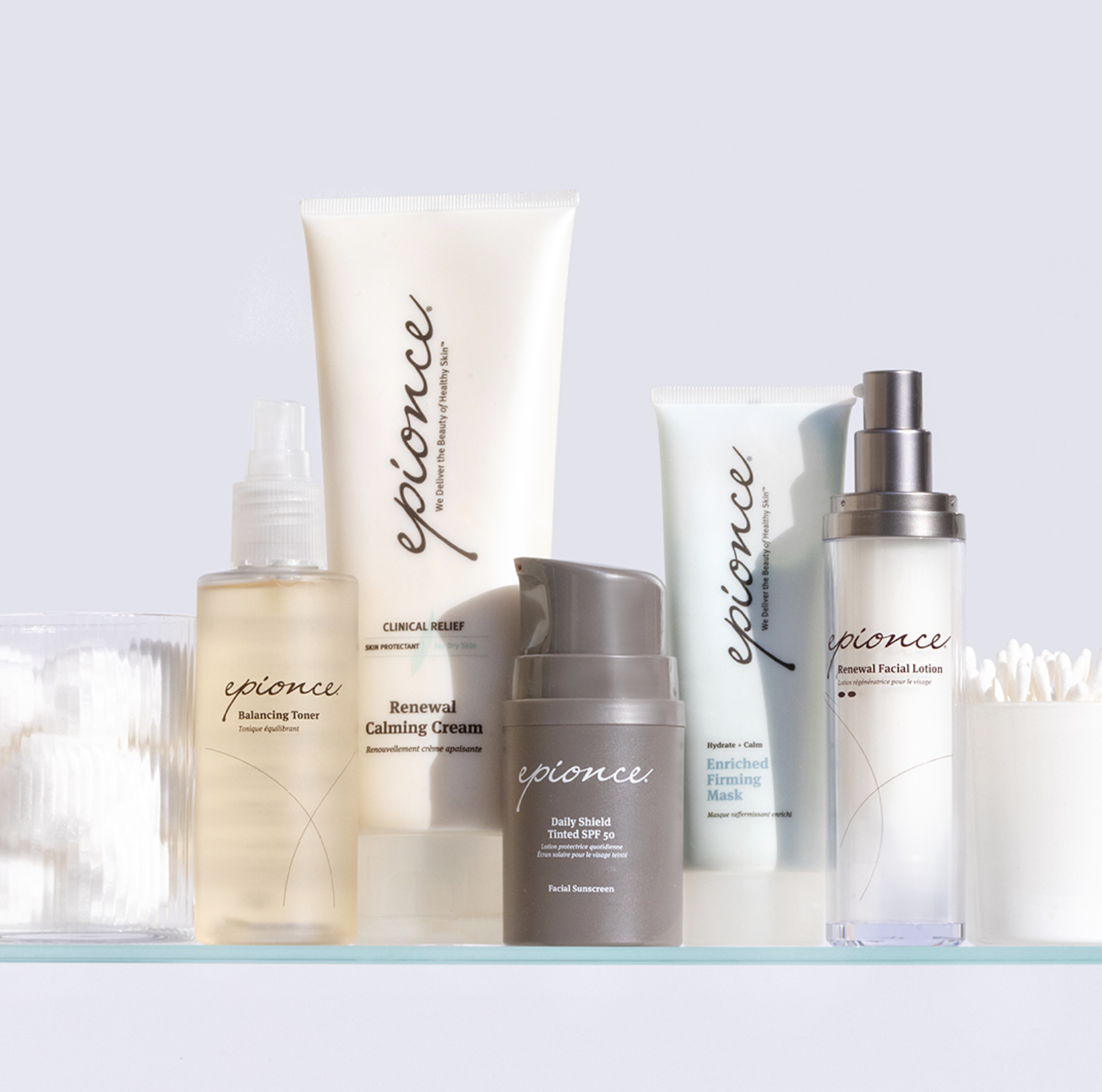
Step 2: Repair the Barrier First (Epionce)
If your skin is tight, flaky, red or stinging, nothing else matters until the barrier is repaired. Actives work better on healthy skin, and they irritate damaged skin.
This is where Epionce shines. The line was built around barrier repair and calming inflammation, using botanical ingredients and the lipids your skin needs to rebuild its mortar. Research on barrier repair shows that giving skin the right balance of its own lipids (ceramides, cholesterol and fatty acids) helps it recover faster than giving it just one of them (Man et al., 1996).
What I reach for:
Epionce Milky Lotion Cleanser: a cream cleanser that cleans without stripping. The easiest swap you'll make this fall.
Epionce Enriched Firming Mask: This hydrating mask is expertly formulated with botanical ingredients to help soothe and improve the visible appearance of elasticity and firmness of the skin
Epionce Renewal Calming Cream: for redness-prone or reactive skin that flares when the weather turns.
Give the barrier two weeks. When your skin stops feeling tight after you wash it, you're ready for the next step.
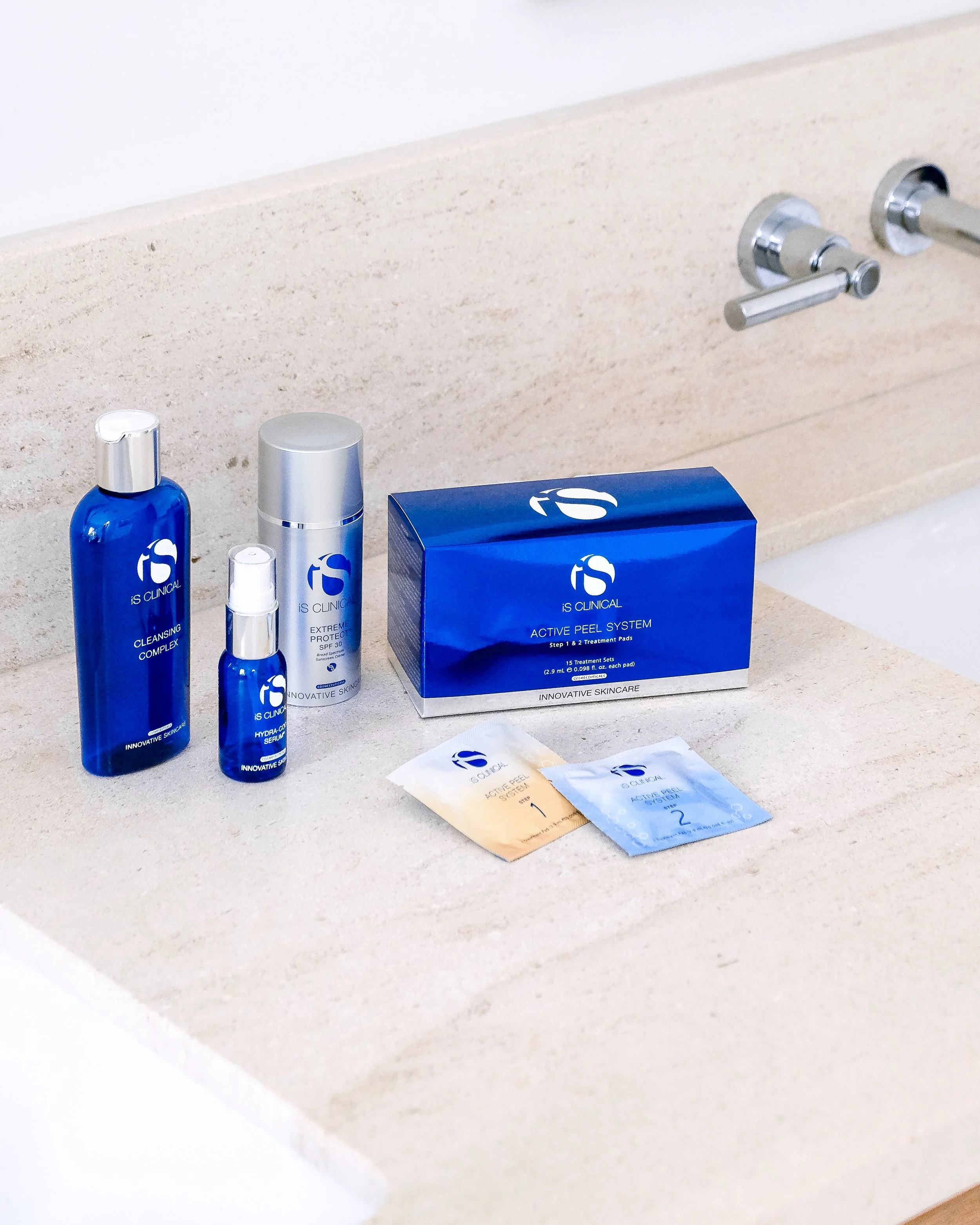
Step 3: Bring Your Actives Back Slowly (iS Clinical)
Fall and winter are the best time of year to use strong actives in Arizona. The sun is lower, you're outside less, and your skin isn't fighting summer heat. The key is reintroducing them one at a time.
iS Clinical is my go-to here because the formulas are potent and still well tolerated, which matters when your skin is coming off a dry spell.
iS Clinical Cleansing Complex: my most-recommended cleanser for normal to oily or acne-prone skin. If your skin is dry, use it just as your 2nd cleanser at night and stick to Epionce milky lotion cleanser for morning and 1st night cleanse.
Brightening Peel Pads: 2 nights a week, on nights you skip retinol.
iS Clinical Brightening Complex: the daily pigment fighter for spots summer left behind.
iS Clinical Retinol+ Emulsion: the retinol I use most. Fall is the time to start or restart a retinoid. In one study, retinol measurably improved fine wrinkles after 24 weeks of consistent use (Kafi et al., 2007). Twenty-four weeks. Start now and you're seeing real change by spring.
Extreme Protect SPF 30 or Eclipse SPF 50+: Extreme Protect for dry fall skin. This has antiaging properties that will knock your socks off! Eclipse for a lighter feel.
How to reintroduce a retinoid: a pea-sized amount, 2 or 3 nights a week, after your moisturizer if you're sensitive. Add nights as your skin settles. Expect some dryness for the first few weeks. That's adjustment, and it passes.
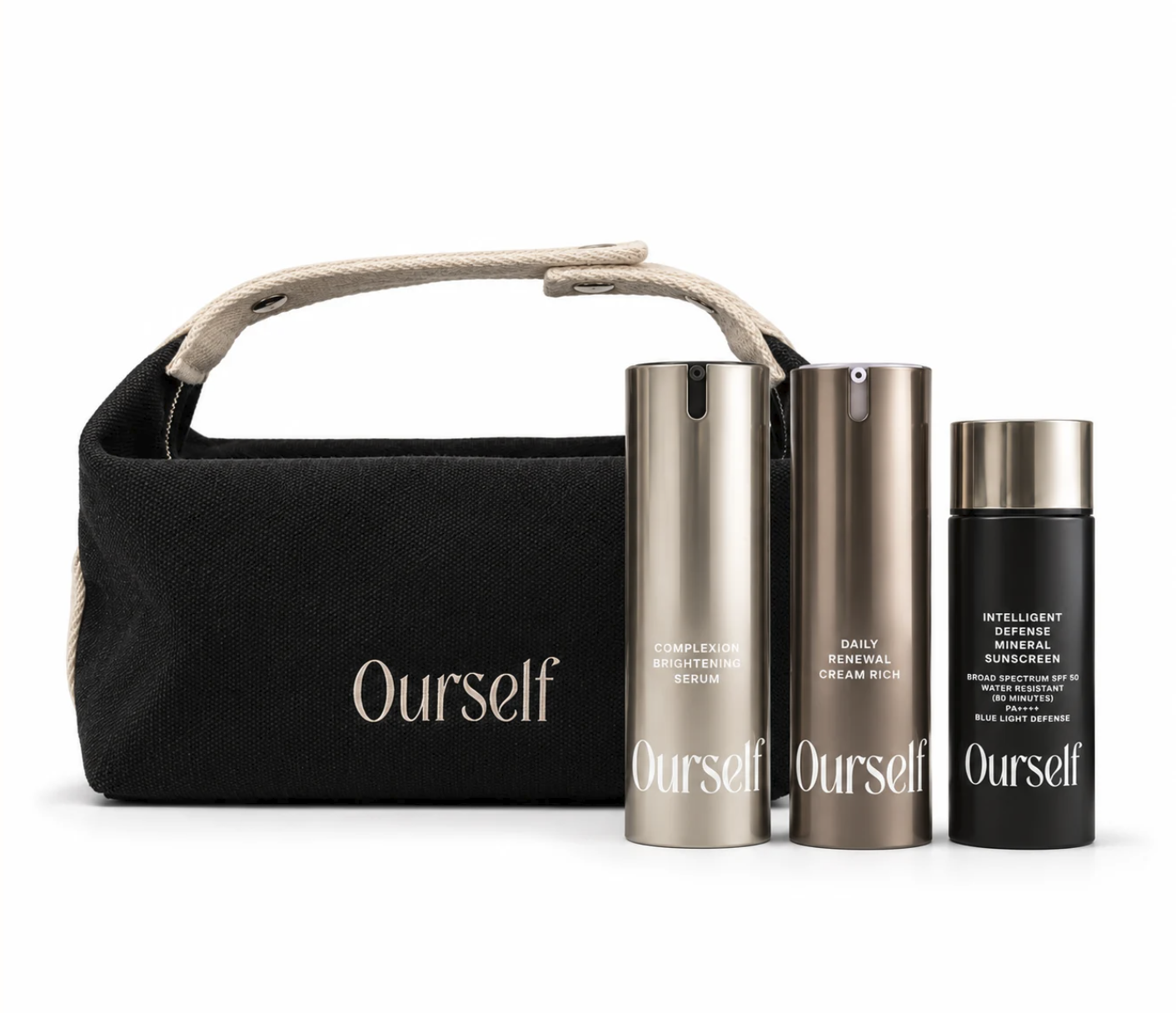
Step 4: Rebuild and Protect (Ourself)
Once your barrier is solid and your actives are back, this is where you start rebuilding. Ourself is the line I use for collagen support and pigment, largely because of how it delivers its ingredients. A great ingredient that can't get into your skin doesn't do much, and Ourself uses a tiered-release system to carry its actives deeper than a standard serum. I wrote about why that matters in Why Your Skincare Really Isn't Working: The Delivery Problem Nobody Tells You About.
Ourself Advanced Regenerative Serum: peptides, hyaluronic acid and vitamin C to support collagen. This is my everyday "rebuild" serum, and it pairs well with any in-office collagen treatment.
Ourself Complexion Brightening Serum: for pigment and melasma. I use it to prep skin before a laser series and to keep pigment calm between visits.
Ourself Advanced Regenerative Eye Serum: for crepiness and fine lines around the eyes, which dry air makes more obvious.
This is a starting point. Your skin may need something different, which is exactly why I'd rather look at it with you.
The Five Most Expensive Fall Mistakes
Buying a whole new routine. Usually you need one or two swaps.
Adding everything at once. If your skin reacts, you won't know what caused it. One new product every week or two.
Over-exfoliating to fix flaking. Flakes on a dry barrier need moisture, not scrubbing.
Skipping SPF because it's cloudy. UV still reaches your skin in December.
Buying by trend. The product everyone's posting about may be the wrong one for your skin. That's money (and sometimes your skin barrier) gone.
Where In-Office Treatments Fit
A good home routine does most of the work. Treatments speed things up:
Bare Bliss Facial: resurfaces the summer buildup and calms the skin back down in one visit.
Chemical peels: fall is peel season, for texture and leftover pigment.
Clarity II and Ultra lasers: for sun spots and pigment, best done now while the sun is low. Here's why I use them instead of IPL or BBL.
Microneedling: for collagen and texture. Starting a series in fall means you see results by spring. More on how microneedling builds collagen.
Let Me Help You Choose (So You Don't Waste Money)
The hardest part of skincare isn't finding good products. It's knowing which ones are right for your skin, in this season, at this point in your life. Hormones, medications, stress and age all change what your skin needs, and the wrong product, even a great one, is money down the drain.
So before you buy anything, reach out:
Send me a photo of your skincare shelf. DM me on Instagram or reply to any of my emails, and I'll tell you what to keep, what to toss and what's missing.
Book a consultation. We'll look at your skin together and build a routine that fits it, using what you already own wherever we can. Book here.
Already know what you need? Shop iS Clinical and Epionce online, or pick up Ourself in the studio.
Members save on every product, every month. If you're building a full fall routine, membership usually pays for itself.
Frequently Asked Questions
How long does it take my skin to adjust to a new routine? Give barrier repair about two weeks and a new retinoid six to eight weeks. Your skin renews itself on roughly a monthly cycle, and slower as you age, so judging a product after five days doesn't tell you much.
Can I use vitamin C and retinol together? Yes, at different times of day. Vitamin C in the morning for antioxidant protection, retinol at night. Unless they are specifically formulated together, these two together can cause irritation and cancel out each other’s benefits.
Do I really need a different routine every season? You don't need a new routine. You need to adjust the same one. Most people swap their cleanser and moisturizer, then bring their actives back up.
Is medical-grade skincare actually worth it? For the products doing the heavy lifting, yes. I explain why in Why Sephora Can't Sell You What Your Skin Actually Needs.
What if I'm pregnant or breastfeeding? Skip retinoids, and talk to me before starting any new active. There are so many great alternatives these days.
Christalyne Causey, PhD, is a hormone specialist, licensed esthetician and the founder of Bare in Scottsdale, AZ. She practices inside-out aesthetics, combining hormone health, evidence-based skincare and advanced aesthetic treatments.
Related reading:
The Collagen Equation: What's Stealing It, What Rebuilds It, and Why Both Sides Are Important
Inside-Out Aesthetics: Why Hormones, Nutrition, and Skin Health Are Inseparable
Sources
Grove GL, Kligman AM. Age-associated changes in human epidermal cell renewal. J Gerontol. 1983;38(2):137-142.
Man MQ, Feingold KR, Thornfeldt CR, Elias PM. Optimization of physiological lipid mixtures for barrier repair. J Invest Dermatol. 1996;106(5):1096-1101.
Kafi R, et al. Improvement of naturally aged skin with vitamin A (retinol). Arch Dermatol. 2007;143(5):606-612.
Hughes MCB, et al. Sunscreen and prevention of skin aging: a randomized trial. Ann Intern Med. 2013;158(11):781-790.