
Why Your Melasma Keeps Coming Back (And What Actually Works)
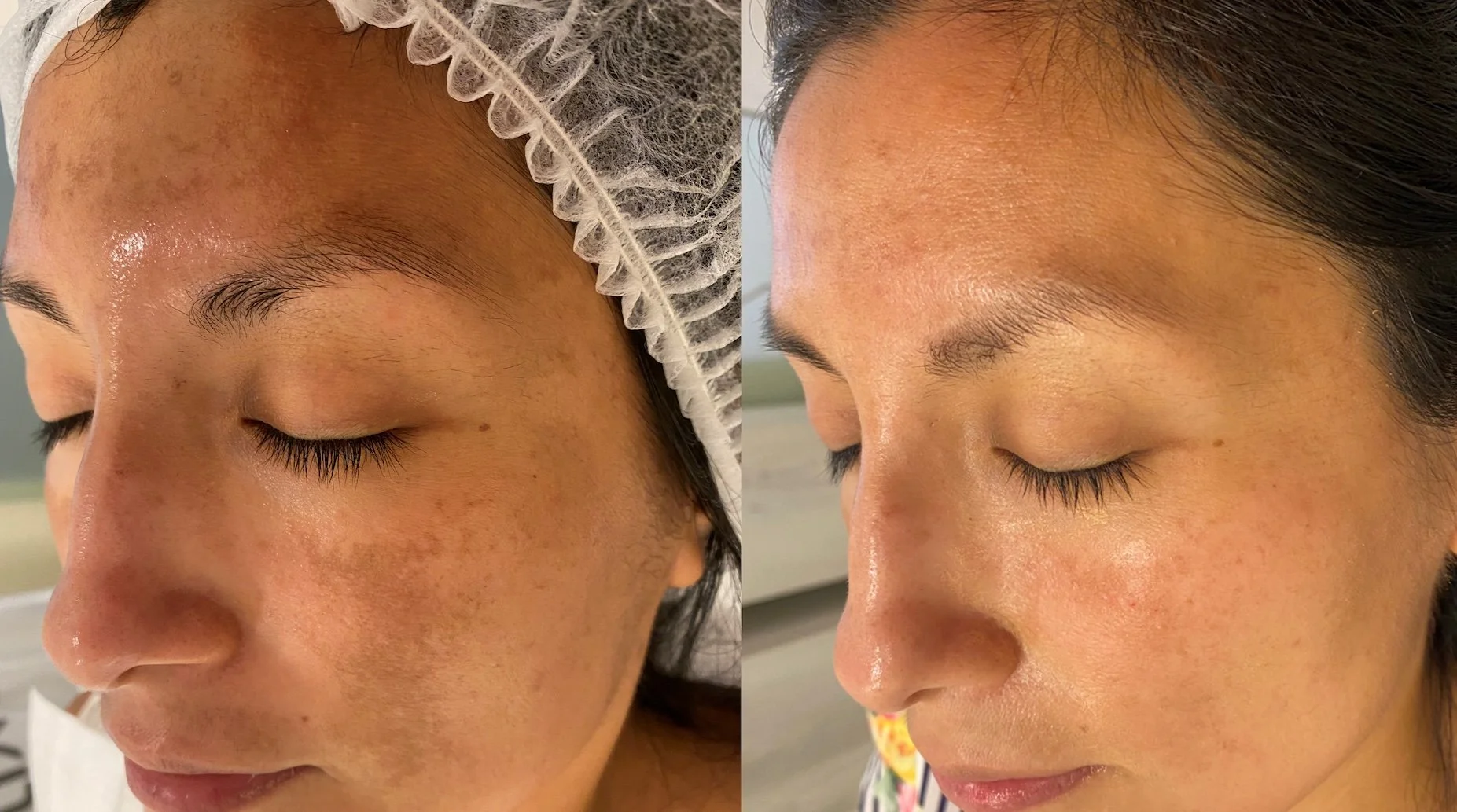
One of the most frustrating things I hear in clinic is this:
“I’ve tried everything for my melasma.”
Vitamin C.
Hydroquinone.
Retinol.
Every brightening serum you can think of.
Sometimes it fades a little.
But then it comes right back.
Or never fully clears at all.
And eventually, people start wondering:
Is my skin just resistant?
It’s not. But believe me when I say, I feel your frustration…because I’ve been there too!
Melasma Is Not a Product Problem
Melasma is one of the most misunderstood skin conditions, because it looks like a surface-level issue, when really it is a “signaling” issue.
Your skin is responding to internal and external triggers that are telling it to produce pigment… even when you’re actively trying to reduce it.
Which is why using a single product (even a “good” one) rarely gives lasting results.
What Actually Drives Melasma
Melasma is influenced by multiple systems working together:
1. Hormones
Estrogen and progesterone play a major role in pigment production. This is why melasma often shows up during pregnancy, while on birth control, or during hormonal shifts.
2. Sun Exposure (Even the Kind You Don’t Think About)
It’s not just laying out in the sun.
Daily exposure, like driving, walking to your car, sitting by a window, all adds up.
And heat + light both stimulate melanocytes (your pigment-producing cells).
Awesome for us desert dwellers, right?
3. Inflammation
Acne, irritation, over-exfoliation, overly aggressive treatments, all increase inflammatory signals in the skin, which can worsen pigmentation.
4. Skin Barrier Health
If your barrier is compromised, your skin becomes more reactive… and more prone to pigment changes.
Why Most Melasma Treatments Fall Short
Most approaches focus on just lightening pigment.
And yes, that’s part of it.
But if you’re not also addressing:
the signals telling your skin to keep producing pigment
and the environment your skin is trying to function in
…you’ll stay stuck in the cycle:
Improve → regress → repeat
This is why melasma feels “stubborn.”
It's because this form of hyperpigmentation is rarely treated comprehensively.
What Actually Works (A Smarter Strategy)
Treating melasma effectively requires a layered, coordinated approach:
✔️ Targeted Treatments
In-clinic treatments (like laser or advanced modalities) to break up existing pigment and stimulate healthy skin turnover.
Please note: not all lasers are appropriate for melasma. As someone who spends a good deal of her time managing complications or less-than-ideal results from other providers, I encourage you to do your research beforehand so you can choose an experienced provider who is knowledgeable about melasma.
✔️ Medical-Grade Skincare
Products that regulate pigment production, support cell turnover, and reduce inflammation.
✔️ Barrier Repair
Keeping the skin strong, hydrated, and resilient so it can respond properly to treatment.
✔️ Strict Protection
This is the part most people underestimate.
Daily SPF is non-negotiable!
But not just any random SPF.
Tinted sunscreens (with iron oxides) help protect against visible light, which we now know contributes to pigmentation.
And consistent use matters more than perfection.
✔️ Internal Support (This Is the Missing Piece for Most People)
This is where melasma treatment often falls apart.
Even if you’re doing everything right topically, your body can still be signaling your skin to produce pigment.
Melasma is strongly influenced by internal factors like:
Hormonal fluctuations (estrogen, progesterone shifts)
Chronic inflammation
Blood sugar dysregulation
Nutrient deficiencies that impact skin healing and repair
If these aren’t addressed, you’ll often see:
→ slower progress
→ inconsistent results
→ or pigment that keeps coming back
This is why I like to integrate nutrition and hormone-focused strategies alongside treatments. Not as an “extra”, but as part of actually solving the problem.
⚠️ A Quick Note on Medications
Some medications can make melasma more difficult to treat, or more likely to recur.
The most common include:
Hormonal birth control
Hormone replacement therapy
Certain photosensitizing medications
This doesn’t mean you need to stop anything.
But it does mean your treatment plan needs to account for it.
Otherwise, you’re working against a trigger that’s still active in the background.
Why Results Finally Start to Stick
When both internal and external factors are addressed, things can finally shift. Your skin is no longer being constantly triggered to produce pigment.
Which means:
treatments work better
results last longer
and progress becomes predictable
It won’t happen overnight. But you’ll steadily see improvement. Best yet, it will be more sustainable.
If You’ve Been Struggling With Melasma…
You need a strategy that actually accounts for how your skin works.
This means no more buying random products or one off treatments because it worked for your friend or some influencer.
Get a consultation with a pro and a strategy for tackling the issue from the ground up.
That’s exactly what we focus on inside my clinic.
Ready to Treat Melasma the Right Way?
If your melasma has been coming back—or never fully improving—it’s time to approach it differently.
We’ll assess:
your triggers
your current routine
and build a plan that actually works with your skin, not against it
Trust me, melasma isn’t random.
And when you treat it correctly… it doesn’t have to be permanent.