
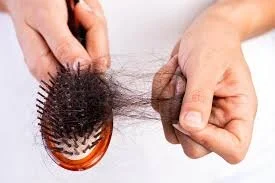
August is National Hair Loss Awareness Month, and I want to spend this post doing what I think is actually useful: laying out the real numbers, the real causes, and the real treatment options, instead of the two most common responses people get when they bring up their hair loss concern, which are "that's just genetics" or a hard sell for the first product someone hands them.
The Numbers Are Bigger Than People Assume
Hair loss is often treated like a niche concern, but an estimated 50 million men and 30 million women in the United States are affected by what's known as androgenetic alopecia or pattern hair loss. There is a lifetime risk of up to 80% of men and 50% of women experiencing hair loss at some point.
For men, the hair loss often shows up early and progresses steadily with around 30% of men in their 30s already showing signs, roughly half of Caucasian men are affected by age 50, and that climbs to about 80% by age 70. Yikes!
For women, the onset is very different with hair loss tending to accelerate sharply around menopause, with roughly half of women over 65 affected.
The point of all this is to say that if you're dealing with thinning, shedding, or a widening part, you are not the outlier. You're actually the statistical norm. This is important. We should be normalizing talking about it. I believe that is the first step toward actually addressing hair loss instead of just silently managing it with styling tricks, over priced supplements and a prayer that it stops.
Why "It's Just Genetics" Is an Inadequate Answer
Genetics absolutely play a role! The sensitivity of your hair follicles to DHT (a byproduct of testosterone) is almost entirely inherited. But genetics set the stage; they don't write the whole script. Hair follicles are hormonally responsive tissue, and several other factors directly influence whether a follicle stays in its active growth phase (anagen) or shifts prematurely into shedding (telogen):
DHT sensitivity. In genetically predisposed follicles, DHT binds to receptors and gradually shrinks the follicle over repeated growth cycles. This is the core mechanism of androgenetic alopecia in both men and women.
Estrogen decline. Estrogen has a protective effect on hair follicles, which is part of why hair loss accelerates so noticeably around perimenopause and menopause, when estrogen drops.
Thyroid dysfunction. Both hypo- and hyperthyroidism disrupt the hair growth cycle. Thyroid hormone is directly involved in follicle metabolism, and thyroid-related hair loss is frequently missed because it's assumed to be pattern baldness or "just stress."
Cortisol and chronic stress. Sustained elevated cortisol can push follicles out of the growth phase and into shedding (a pattern called telogen effluvium), and it can also worsen underlying androgenetic alopecia.
Postpartum hormonal shifts. The dramatic hormone drop after childbirth is one of the most common (and most temporary) triggers of significant shedding. I thought for sure I was going bald, then everything started coming back…awkwardly.
This is exactly why I think hair loss deserves the same "inside-out" approach I bring to skin. We should be asking what the underlying cause is and addressing that as well as treating what is visible. Otherwise results will only be subpar.
What Actually Helps: A Layered Approach
There is no single treatment that addresses every driver of hair loss. Unfortunately there is rarely one single cause. The most effective approach layers a few strategies to cover multiple bases:
1. Identify the driver. A hormone panel, looking at thyroid function, estrogen, testosterone/DHT, and cortisol to tell you what you're actually working with. Treating hormonal hair loss without this step is a guess.
2. In-office laser stimulation. At Bare, we use The Ultra, which delivers targeted energy to the scalp to increase circulation and stimulate dormant follicles. It works on both androgenic (hormonal/pattern) and stress-related (telogen effluvium) hair loss, and it's typically paired with a broader protocol including diet and homecare. Visible density improvements generally take three to six months, consistent with the natural pace of the hair growth cycle.
3. At-home peptide support. This is where a well-formulated topical serum earns its place in the routine. We typically use KeraFactor, a serum built around a patented complex of biomimetic peptides and engineered to mimic the signaling molecules your body naturally uses to support follicle activity, delivered via Nanofluorosome™ technology designed to get those peptides down to the hair duct rather than sitting on the surface. It's formulated without hormones or drugs, which makes it a reasonable daily addition for most people regardless of what's driving their hair loss. The manufacturer's reported data shows significant improvements in hair growth and diameter with consistent daily use. Results are generally visible starting around three to six months, with fuller results continuing to build over twelve to eighteen months. As with any hair intervention, consistency over months (not weeks) is what determines whether it works.
4. Address the root hormonal or nutritional driver. If your hormone panel points to a thyroid issue, an estrogen decline pattern, or chronically elevated cortisol, that's needs to be addressed in order to have lasting results. Laser and topical support the follicle. Hormone correction determines whether the follicle can respond.
When to Actually Get Evaluated
A few signs that suggest it's worth getting a proper evaluation rather than waiting it out:
Diffuse thinning rather than a defined bald spot
Noticeably more hair in the shower drain, in your brush or on your pillow
Onset around a major hormonal event like postpartum, perimenopause, a thyroid diagnosis
Accompanying symptoms like fatigue, temperature sensitivity, or cycle changes
No improvement after months of over-the-counter products
If several of these sound familiar, your hair loss is beyond "try another shampoo or this new supplement". It’s time to look into more concrete answers.
This Month
Because August is Hair Loss Awareness Month, KeraFactor is offering an additional 20% off their homecare products. This a good time to start (or restart) a consistent at-home protocol, since the biggest factor in whether it works is simply staying consistent long enough to see the follicle cycle respond.
Shop KeraFactor — 20% off with code HAIR 20 during the month of August.
Or use the code thebareeffect10 for year round 10% off
Book a hair restoration or hormone consult at Bare
Christalyne Causey, PhD, is the founder of Bare. She practices integrative aesthetics — combining hormone optimization, evidence-based skin and hair care, and advanced aesthetic treatments to address root causes, not just symptoms.